|
Subscribe / Renew |
 |
Contact Us |
| ► Subscribe to our Free Weekly Newsletter | |

Construction Bids
| home | Welcome, sign in or click here to subscribe. | login |


 print print  email to a friend email to a friend  reprints add to mydjc reprints add to mydjc |  |
July 17, 2026
Five years into a 15-year development agreement, a section of land under tribal control, including the old Port Gamble sawmill, has a go-forward conceptual plan.
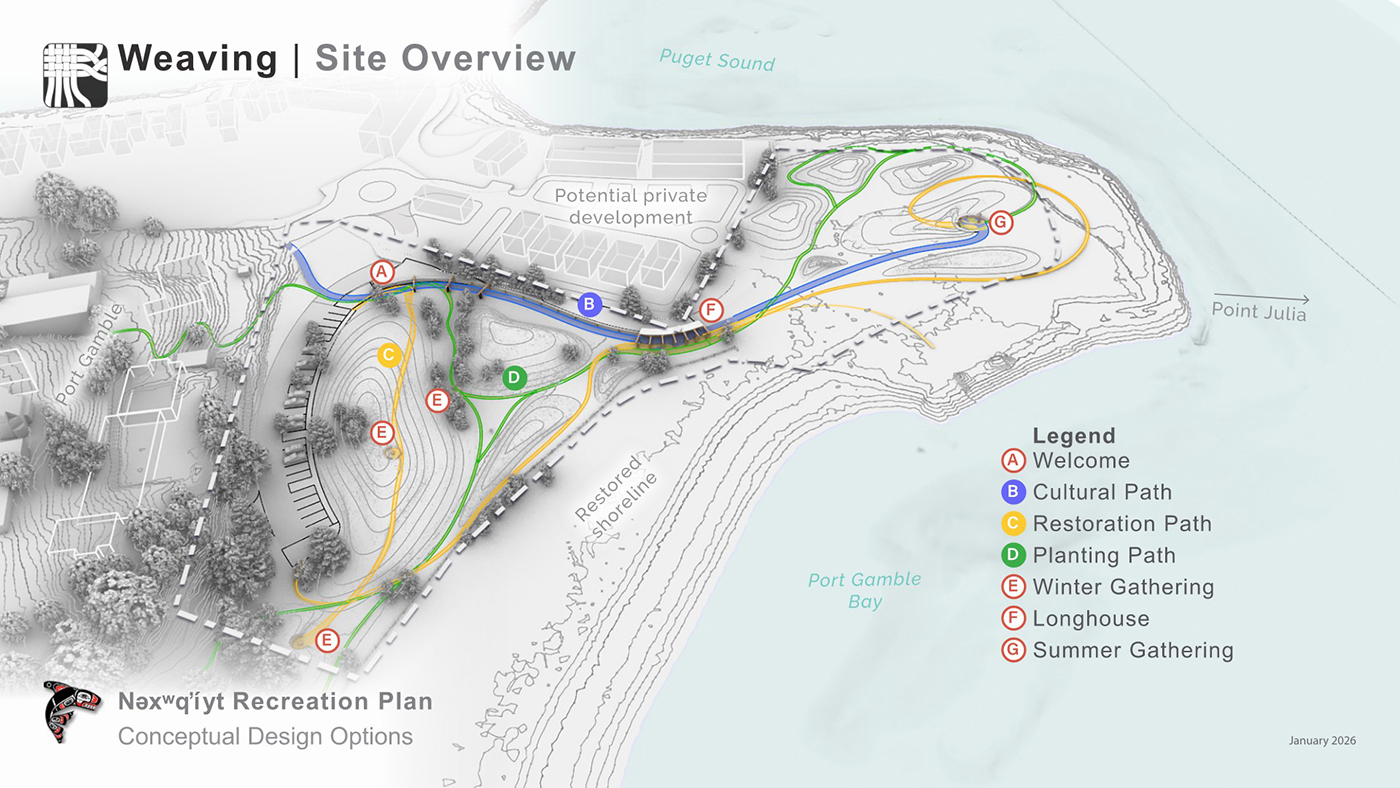
After robust public outreach, the Port Gamble S'Klallam Noo-kayet Point Recreation Plan took a big step in the design phase. (Noo-kayet is the S'Klallam name for the Port Gamble shore.) From three concepts presented by project lead, CAST Architecture, the Port Gamble S'Klallam Tribe selected one design last month to continue the design process.
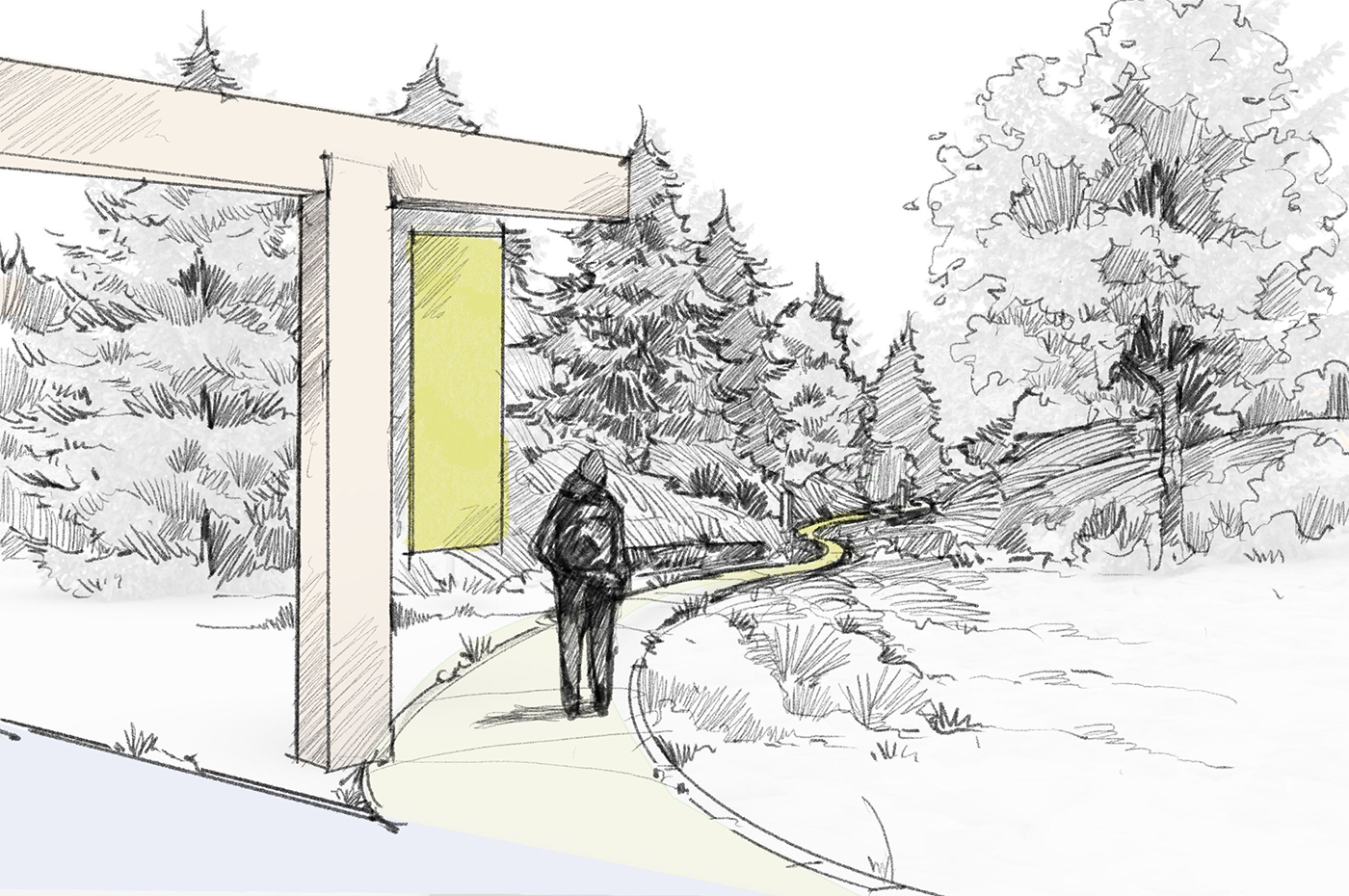
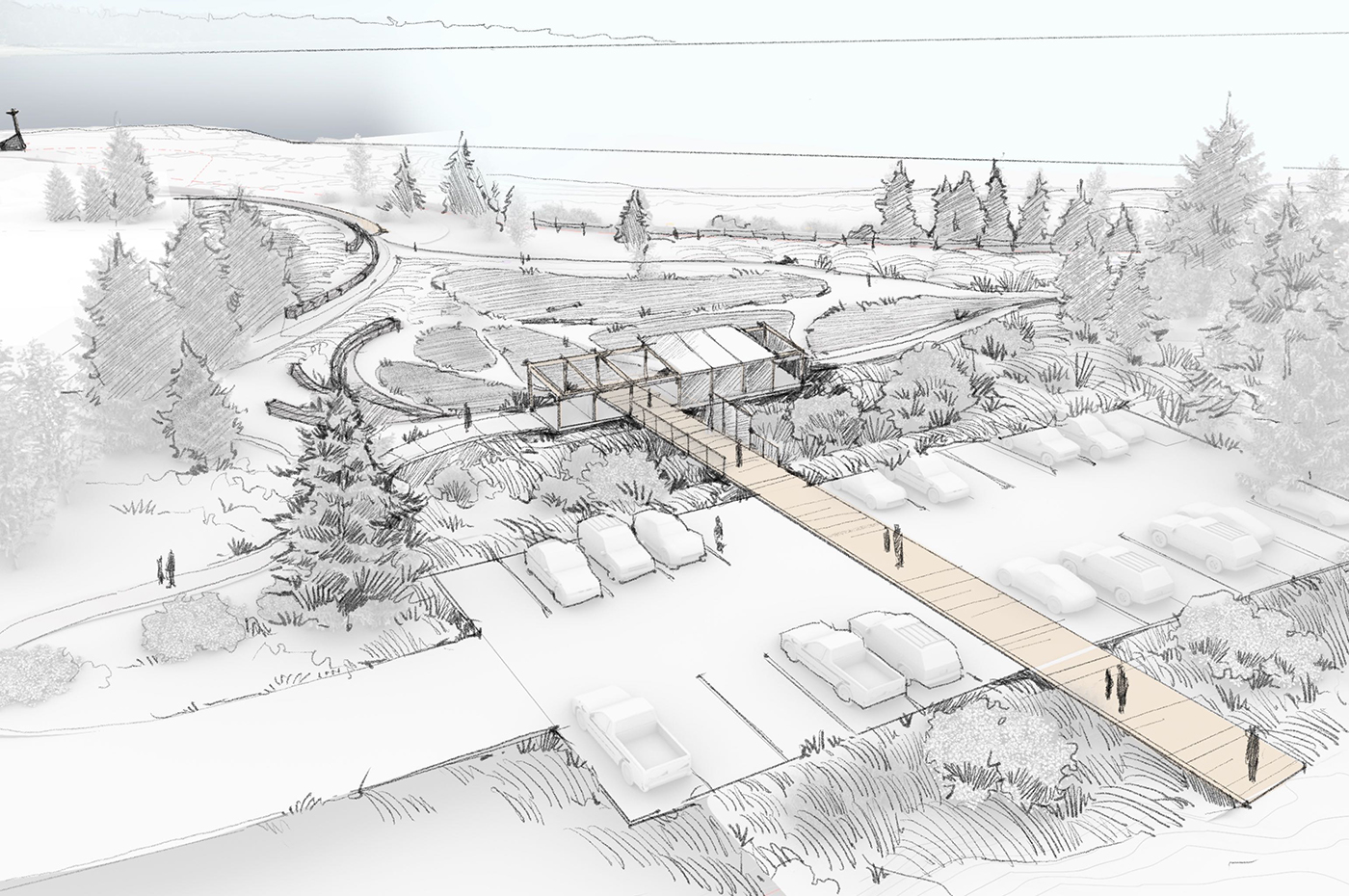
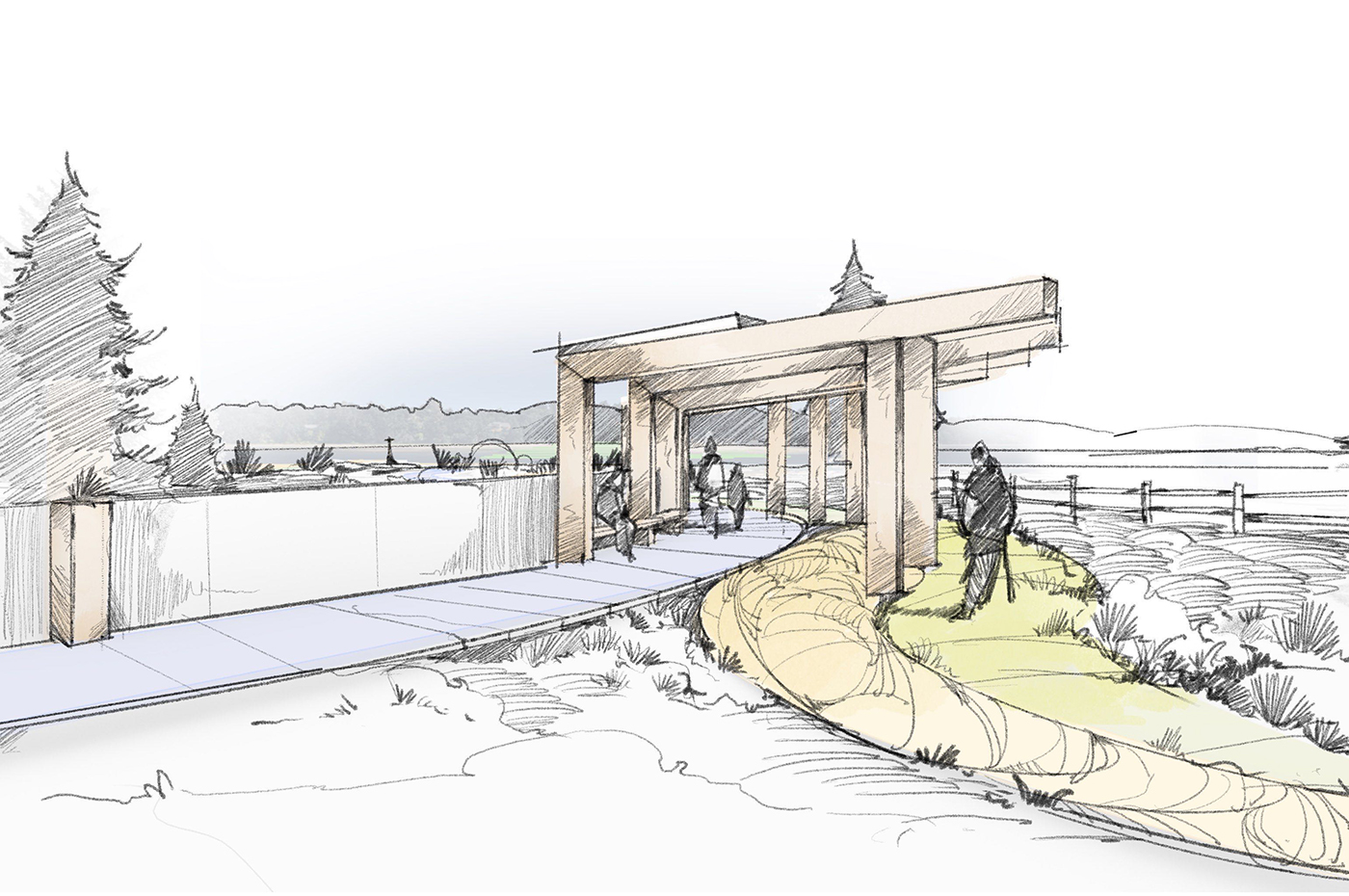
The site plan brings together the tribe's intention to honor their heritage while welcoming visitors to learn about S'Klallam culture and the local landscape. A welcome area leads to seasonal gathering spaces designed for winter and summer use, native gardens and trails developed in collaboration with Heronswood Garden, site-specific artworks by local tribal artists, and a canoe landing beach. The site is directly across Port Gamble from Point Juila on S'Klallam Tribal land.
Port Gamble is a National Historic Landmark known for the quaint company town that housed and served the Pope and Talbot workers for over 140 years. The portion of the redevelopment where the 19th-century sawmill once stood sits along the northeastern shoreline below the village. The sawmill was in operation until the 1990s. Since then, the mill and its shorelines have been undergoing a lengthy clean up.
Rayonier bought, and continues to own, all the village-area land from Pope Resources. The tribe purchased the development rights and a perpetual conservation easement for the 30-plus-acre mill site. The easement limits development on the site to restoration work and low-impact recreation.
According to the Department of Ecology, the mill site and shoreline cleanup is in final stages, paid for in most part by Pope Resources, along with a small portion of DOE funding. The project was part of DOE's Puget Sound Initiative aimed at cleaning up sensitive sites and important community resources.
In 2021 Kitsap County approved the 15-year Port Gamble Development Agreement, which designated a variety of zoning changes and increased density development, including redevelopment of the sawmill site.
The design phase of the Noo-kayet Point Recreation Plan began in 2024 and is scheduled to continue info 2027. The schedule continues with Phase I bids in summer 2027, Phase I construction fall 2027 — winter 2028. Phase II construction timing is yet to be determined as it coincides with the tribe's shoreline restoration project, still in development.
The project team consists of CAST architecture, architect and project lead; Environmental Science Associates (ESA), landscape architecture, permitting and community engagement, and cultural resources consulting; Gray & Osborne, civil and stormwater, structural, and electrical engineering; Terra-Geo, geotechnical engineering; and Statewide Land Surveying, bathymetric surveying.
Nina Milligan can be
reached by email or by phone
at (206) 219-6482.